Straight-Line Depreciation Method: Straight Line Depreciation Example and Calculation Guide

Salvage Value is the assets’ scrap value that remains at the end of their useful life. Straight-Line depreciation is the depreciation method that calculated by divided the assets’ cost by the useful life. Assets cost are allocated to expense over their life time, the expenses equal from the beginning to the end of assets’ life. We assume that the assets decrease their value equally from one period to another period. Nearly all businesses must use the modified accelerated cost recovery system (MACRS) or alternative depreciation system (ADS) on their income tax returns. It simplifies accountants’ calculations, which makes them less prone to error and reduces the record-keeping needed for financial statements.

Advance Your Accounting and Bookkeeping Career

  • Depreciation generally applies to an entity’s owned fixed assets or to its leased right-of-use assets arising from lessee finance leases.
  • The straight-line method’s popularity stems from its simplicity and ease of calculation.
  • It’s also ideal when you want a simple, predictable method for calculating depreciation.
  • The fixed asset will now have an updated annual depreciation expense of $11,667 for each year of its remaining useful life.
  • Tickmark, Inc. and its affiliates do not provide legal, tax or accounting advice.
  • Get $30 off a tax consultation with a licensed CPA or EA, and we’ll be sure to provide you with a robust, bespoke answer to whatever tax problems you may have.

In some scenarios, subsequent journal entries may change due to adjustments to the fixed asset’s useful life or value to the company as a result of improvements or impairments of the asset. For example, during year 5 the company may realize the asset will only be useful for 8 years instead of the originally estimated 10 years. This is machinery purchased to manufacture products for the business to sell. Since the equipment is a tangible item the company now owns and plans to use long-term to generate income, it’s considered a fixed asset. Regardless of the depreciation method used, the total depreciation expense (and accumulated depreciation) recognized over the life of any asset will be equal. However, the rate at which the depreciation is recognized over the life of the asset is dictated by the depreciation method applied.

Claim $20 Off PRO Plus

This is a very easy and involves less complex calculation, which makes it comprehensible for everyone. This process requires some actual data as well as some estimations, which directly involves the financial statements of the business. The straight-line method’s popularity stems from its simplicity and ease of calculation.

The straight line depreciation method is the process of allocating the cost and the asset over its entire working period in equal amount. Therefore, the asset value reduces uniformly, finally reaching its scrap value at the end of the useful life. Recording straight-line depreciation in financial statements involves debiting the depreciation expense account and crediting the accumulated depreciation account annually.

How to calculate straight-line depreciation

It is most useful when an asset’s value decreases steadily over time at around the same rate. You can revise future depreciation calculations to reflect the updated salvage value. This method calculates depreciation by looking at the number of units generated in a given year. This method is useful for businesses that have significant year-to-year fluctuations in production. At the end of each year, review your depreciation calculations and asset values. Adjust for any unexpected changes, like reduced useful life due to heavy usage or market shifts affecting salvage value.

Create a free account to unlock this Template

  • All information prepared on this site is for informational purposes only, and should not be relied on for legal, tax or accounting advice.
  • Straight line depreciation method charges cost evenly throughout the useful life of a fixed asset.
  • The Eastern Company will allocate a depreciation of $3,200 to all the years of the useful life of the fixed asset.
  • The “2” in the formula represents the acceleration of deprecation to twice the straight-line depreciation amount.
  • Let’s say you own a tree removal service, and you buy a brand-new commercial wood chipper for $15,000 (purchase price).
  • For the past 52 years, Harold Averkamp (CPA, MBA) hasworked as an accounting supervisor, manager, consultant, university instructor, and innovator in teaching accounting online.

Understanding this distinction is crucial for accurate financial analysis and reporting. An alternative to straight-line depreciation is the declining balance method, where the value of the asset is reduced by a percentage rather than a fixed amount. The straight-line method is one of the simplest ways to determine how much value an asset loses over time.

It provides a clear and consistent way to spread the cost of an asset over its expected lifespan, making it ideal for assets with a steady and predictable usage pattern. This makes it a preferred choice for businesses that value financial planning and reporting consistency. The straight-line and accelerated depreciation methods differ in how they allocate an asset’s cost over time. It’s also ideal when you want a simple, predictable method for calculating depreciation.

This method is calculated by adding up the years in the useful life and using that sum to calculate a percentage of the remaining life of the asset. The percentage is then applied to the cost less salvage value, or depreciable base, to calculate depreciation expense for the period. Here is how to calculate the annual depreciation expense using double declining balance. An accelerated depreciation method takes the bulk of the depreciation expense in the first few years and a lower rate of depreciation in the final few years of the asset’s useful life.

It is important to understand that although the depreciation expense affects the net income and therefore the equity of a business, it does not involve the movement of cash. No actual cash is put aside, the accumulated depreciation account simply reflects that funds will be needed in the future to replace the fixed assets which are reducing in value due to wear and tear. In subsequent years, the aggregated depreciation journal entry will be the same as recorded in Year 1. Further, the full depreciable base of the asset resides in the accumulated depreciation account as a credit. To calculate the straight-line depreciation expense of this fixed asset, the company takes the purchase price of $100,000 minus the $30,000 salvage value to calculate a depreciable base of $70,000. This results in an annual depreciation expense over the next 10 years of $7,000.

For example, if a computer is expected to last 5 years, it will be depreciated by one fifth of its value each year. Learn about straight-line depreciation and how to apply it when depreciating fixed assets. Straight-line is a depreciation method that gives you the same deduction, year after year, over the asset’s useful life. The deduction amount is simply the asset’s cost basis divided by its years of useful life. On a graph, the asset’s value over time would appear as a straight line sloping downward, hence the name.

However, for assets that lose value quickly or have uneven usage, other methods may be more suitable. This number will show you how much money the asset is ultimately worthwhile calculating its depreciation. Chartered accountant sl depreciation method Michael Brown is the founder and CEO of Double Entry Bookkeeping. He has worked as an accountant and consultant for more than 25 years and has built financial models for all types of industries. He has been the CFO or controller of both small and medium sized companies and has run small businesses of his own. He has been a manager and an auditor with Deloitte, a big 4 accountancy firm, and holds a degree from Loughborough University.

Straight-line depreciation is an uncomplicated way to calculate depreciation on your assets. Businesses choose this method because they can spread the expense over several accounting periods (or several years) to reduce their net income, and they prefer it to be a predictable expense. The accumulated depreciation account has a normal credit balance, as it offsets the fixed asset, and each time depreciation expense is recognized, accumulated depreciation is increased. The units of output method is based on an asset’s consumption of something measurable.

Because organizations use the straight-line method almost universally, we’ve included a full example of how to account for straight-line depreciation expense for a fixed asset later in this article. Below are three other methods of calculating depreciation expense that are acceptable for organizations to use under US GAAP. Mastering the straight-line depreciation method is crucial for effective financial health in any business. It simplifies allocating the cost of assets over their useful life, ensuring predictable and consistent financial reporting.

An asset’s useful life is the length of time over which a company expects the asset to continue to remain useful– to provide a benefit to the business. It is the length of time over which an asset is depreciated because the expense from the asset must tie to the revenue generated by the asset in the same period per the matching principle. To calculate the straight line basis, take the purchase price of an asset and then subtract the salvage value, its estimated value when it is no longer expected to be needed. Then divide the resulting figure by the total number of years the asset is expected to be useful. In finance, a straight-line basis is a method for calculating depreciation and amortization.

To get a better understanding of how to calculate straight-line depreciation, let’s look at an example. Additionally, the IRS allows businesses to write off certain expenses using this method under the Modified Accelerated Cost Recovery System (MACRS). The straight-line method is a popular choice for its simplicity, but it has limitations. Understanding the pros and cons can help you decide if this depreciation method is right for your business.


Audit risk model: Understanding the Audit Risk Model and Detection Risk

audit risk model

Look at the functionality offered by the Predict360 Audit management software and learn how your organization can do audits at accounting a better pace with fewer resources. The auditors then use the model to establish relationship between the risks and take action to reduce overall audit risk to an acceptable level. As we will see in the analysis below, auditors plan and perform their audit to keep audit risk at an acceptably low level. If inventory is stolen without management knowing, the inventory account on the balance sheet will be overstated. Auditors would therefore plan their audit procedures to focus on the existence assertion.

  • Control risk played a major part in the Enron scandal – the people providing the misleading numbers were widely respected and some of the most senior people in the organization.
  • This means auditors perform more detailed tests to verify the account’s assertions.
  • These strategies include the use of professional skepticism, the application of analytical procedures, conducting substantive testing, and obtaining corroborative evidence from reliable sources.
  • The volatility of the business landscape means that an audit’s recommendations might become obsolete by the time they’re published.
  • When control risk is assessed as high, auditors will need to perform more extensive substantive procedures to obtain sufficient evidence about the accuracy and completeness of the financial statements.

How to calculate audit risks?

Audit risk is the risk that auditors will issue the wrong opinion on the financial statements. For example, this would occur if an auditor issues an unqualified opinion (saying the financial statements are materially correct) when the financial statements are materially misstated. The auditor then assesses the control risk, which is moderate due to the company’s implementation of effective internal controls and procedures, such as regular employee training, quality control checks, and documentation practices. This is the risk that a material misstatement will not be prevented or detected by a company’s internal controls. Instead, it is influenced by the design and effectiveness of the company’s control environment, including the tone at the top, control activities, and monitoring. Detection risk forms the residual risk after taking into consideration the inherent and control risks pertaining to the audit engagement and the overall audit risk that the auditor is willing to accept.

Audit Risk Models: Understanding and Application

audit risk model

Inherent risk is the risk that a client’s financial audit risk model statements are susceptible to material misstatements in the absence of any internal controls to guard against such misstatement. Inherent risk is greater when a high degree of judgment is involved in business transactions, since this introduces the risk that an inexperienced person is more likely to make an error. It is also more likely when significant estimates must be included in transactions, where an estimation error can be made. Inherent risk is also more likely when the transactions in which a client engages are highly complex, and so are more likely to be completed or recorded incorrectly.

audit risk model

Relationship Between Acceptable Audit Risk and Audit Assurance

audit risk model

Finally, this Record Keeping for Small Business risk is present when a client engages in non-routine transactions for which it has no procedures or controls, thereby making it easier for employees to complete them incorrectly. However, the risks of material misstatement of the financial statements are the same for both the audit of financial statements and the audit of internal control over financial reporting. The audit risk model provides a risk-based audit approach to assess the risks of material misstatement to determine the scope of audit procedures to perform.

  • Again, you’ll want to document your understanding of your client’s internal control, including the control environment.
  • In this case, auditors will not perform the test of controls on the bank reconciliation.
  • This book is authored by well-known authors in audit, accounting, and finance areas, Karla M. Johnstone, Ph.D., C.P.A. The author holds a Ph.D. in accounting and information systems.
  • Inherent risk refers to the risk that could not be protected or detected by the entity’s internal control.
  • We can also say we are 98.75% confident that our audit procedures will detect a material misstatement, if one exists.
  • Auditors are required to assess those kinds of risks and set up audit procedures to address inherent risks properly.
  • This means auditors can reduce their substantive works and the risk is still acceptably low.

By diligently applying the Audit Risk Model, auditors can enhance the quality and reliability of financial statement audits. This structured approach empowers auditors to make informed decisions about the nature and extent of audit procedures, ultimately providing stakeholders with a level of assurance regarding the accuracy of financial information. Audit risk assessment shows that internal control systems are not efficient enough to reflect misstatements.

audit risk model

AI Invoice Processing: Revolutionizing Accounts Payable with Artificial Intelligence

machine learning invoice processing

One of the core features of AI invoice processing is automated data extraction, which eliminates the need for manual data entry. The system identifies and extracts key details from invoices, https://www.bookstime.com/articles/net-working-capital including invoice number, date, vendor name, line items, and total amount. Using AI and natural language processing (NLP), the software accurately captures structured and unstructured data, reducing processing time and minimizing human errors. AI-powered OCR improves invoice data entry by accurately reading printed and handwritten text, even from complex or varying invoice formats. It recognizes key details like invoice numbers, dates, vendor names, and amounts while reducing errors caused by manual entry.

machine learning invoice processing

Application Management

  • One key advantage of AI invoice processing is the ability to generate real-time reports and insights.
  • Make sure it supports your current accounting software or ERP system and can process your most common invoice formats.
  • This transformation enabled Valtatech to handle complex invoice line items across 60+ templates, significantly reducing processing costs by 65%.
  • Select a solution based on your company size, volume of invoices, and existing systems.
  • It may provide an AI digital assistant for queries and analysis that embeds ChatGPT for finance and uses other AI technologies.

Below are the key benefits of integrating AI-driven solutions into invoice processing. AI-based invoice processing is deploying artificial intelligence and machine learning technologies to automate and optimize the invoice management workflow. It streamlines tasks by leveraging intelligent data capture, natural language processing, and machine learning algorithms to improve efficiency, accuracy, and scalability in the accounts payable process.

machine learning invoice processing

Phase 3: Deep Learning and OCR

machine learning invoice processing

A great example is Hitachi Payment Services, which processes 36,000+ bank statements monthly with Docsumo’s AI solution. Hitachi reduced their reconciliation time by 2x while achieving 99% data accuracy. The AI system’s self-learning capabilities improve with each invoice processed, making machine learning invoice processing data extraction increasingly precise. AI-powered invoice processing solutions offer specific rules to automatically flag invoices with missing information, pricing discrepancies, or other anomalies. For example, you can set up AI to flag invoices with amounts exceeding $5,000 for senior manager approval.

OCR with Nanonets

Before beginning to automate invoice processing, it may be helpful to review a blank invoice receipt template to fully understand the key data fields. Azure’s Invoice Parser API, fuelled by the Form Recogniser model, is a robust and dependable solution. The API utilizes advanced OCR capabilities to precisely extract vital fields and line items from invoices in various formats and quality, such as phone-captured images, scanned documents, and digital PDFs. bookkeeping The API also enables support for utility bills, sales orders, and purchase orders. Invoice Parsing APIs are frequently utilized in accounts payable departments to automate the invoice processing procedure and lessen the requirement for manual data input. Yes, AI invoice processing systems are designed with robust security measures to protect sensitive financial data.

  • The software can determine the appropriate approvers based on invoice amount, department, or other criteria.
  • In today’s fast-paced business landscape, organizations are increasingly turning to artificial intelligence (AI) to streamline operations and improve efficiency.
  • By automating data extraction and processing, we enable businesses to focus on more strategic tasks, improving overall efficiency and productivity.
  • The solution gets smarter with every new invoice it processes; therefore, our example company will eventually have the option of fully automated invoice processing.
  • Automated compliance checks help businesses avoid fines and legal complications.

Cognitive AP Solution

machine learning invoice processing

These technologies include data parsing, language identification, sentiment analysis, logo recognition, question answering, data anonymization, speech recognition, and numerous other capabilities. Given the potential costs and challenges related to open-source models, one cost-effective solution is to use APIs. Eden AI smoothens the incorporation and implementation of AI technologies with its API, connecting to multiple AI engines. With enhanced cash flow management, businesses can avoid late fees, optimize liquidity, and plan financial strategies more effectively. This is a really big deal, especially if you’re working in a financial function. While the data they contain tends to be consistent across all of them, most companies tend to have their own invoice templates, and there are no naming standards for invoice data fields.

The Complete Month-End Close Checklist +Free Excel Template

accounting year end checklist template excel

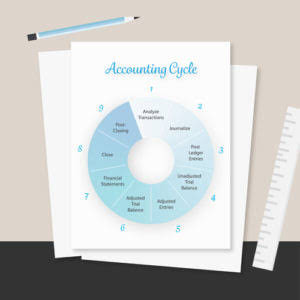
This number has likely risen due to the increasing complexity of financial reporting, stricter compliance requirements, and more sophisticated accounting standards. And for those handling this process for multiple clients with a range of service needs it’s even more time-consuming and overwhelming. As the year-end approaches, it’s important to ensure that your accounting records are in order. One way to do this is by using an Year-End Accounting Checklist accounting year-end checklist template in Excel.

  • This will ensure that you settle all collections and debts without any penalty.
  • Bette Hochberger Inc. is a boutique concierge accounting practice in South Florida specializing in start-ups and small businesses.
  • Our Month End Close Checklist Template will help make the process simpler and more efficient for your firm.
  • It allows you to report correct tax deductions, curb fraud, and maintain a good relationship with your customers.

Timeline and Deadlines for Month-end Closing Checklist

accounting year end checklist template excel

A petty cash template is used to track the important transactions of your organization…. If your staff members have different ways of completing work, it’s time to standardize your process to improve the quality and consistency of your firm’s work. Standardizing your processes through a checklist will save you from the headache that comes with inconsistent work. Our Month End Close Checklist Template will allow  you to effectively delegate work to your team members without worrying about work quality and accuracy.

  • Designed with input from seasoned accountants and bookkeepers, our Accounting Excel templates accurately capture most, if not all, of your accounting processes.
  • Make sure to list all these tasks so you can easily refer back to them when it comes time to create your template.
  • Create standardized processes and templates for key tasks like financial statement preparation, reconciliation, and reporting.
  • Whether you’re a seasoned accounting professional or new to the year-end close process, this guide will provide you with the knowledge and tools you need to get the job done right.

STEP 12: DOUBLE CHECK PAYROLL TAXES

accounting year end checklist template excel

Use a simple business travel itinerary template to keep all of these details in one location, and be able to share the details with important stakeholders. For any company providing goods or services, using an invoice that looks professional and can be customized online bookkeeping to fit your needs, is important. Having real-time access also helps ensure quicker reviews, approvals, and sign-offs, reducing bottlenecks in the process. Consulting department heads helps identify obsolete assets that may no longer be in use, ensuring they are correctly disposed of or written off. For example, if a company sells an old piece of machinery, it should remove the asset from the books and recognize any gain or loss. Depreciation schedules should also be checked to ensure that depreciation is correctly recorded.

accounting year end checklist template excel

Waiting Until the End of the Month to Start the Financial Close Process

accounting year end checklist template excel

Planning – Identify tasks and activities that can be done before the end of the month. Certain tasks, such as the payroll accrual don’t need to be performed after the end of the month. Such calculations can be easily and accurately estimated prior to the end of the month. When reviewing tasks for simplification, be on the lookout for tasks that can be done in pieces. For example, if your company frequently disposes of and/or acquires fixed assets, establish weekly procedures to track and account for this activity.

Yet, the pleasant design in discreet white and gray tones is perfect for an accounting document in any company. Convenient division into several sections with the main tasks also helps to find information in the table quickly. In addition to standardization, Financial Cents enables effective task delegation. Within each workflow, you can assign specific tasks to team members, set due dates, and monitor progress in real time. At the end of each month-end close, take time to evaluate what went well and what didn’t. Getting feedback from your team can also help you understand where the process could be smoother.

  • Fixed assets are long-term assets with a longer life span than one fiscal year.
  • We’ve also included some best practices to help generate ideas on how you can positively impact the month-end close process.
  • It also helps them remember every step needed to complete the monthly bookkeeping process.
  • This template shows all team members the specific information they need from clients to get their tax work done.
  • All visualizations are downloadable and can be exported as interactive embeds.

If you decide to provide employee bonuses, ensure you have the appropriate withholding tax. As a last resort, you can write off unpaid invoices that are not paid or refused to pay you. Talk to your accountant to determine if this is the right action for your small business. This will include any taxes you need to pay before the end of the quarter (e.g., estimated taxes) and any other special costs (e.g., legal fees for negotiating contracts with vendors). You should always aim for those cash inflows to be greater than https://www.bookstime.com/ cash outflows to avoid dipping into negative cash flow.

Step 4. Process year-end data

accounting year end checklist template excel

Distribute a contact list with names, titles, and contact information and encourage people to use this list proactively. This review is an opportunity to check that all invoices were paid and all payments were received. It’s especially important if there were any changes in staff or accounting software during the year. Your year-end checklist needs to include a review of accounts payable and receivable for a few reasons. Without accurate records, it’s difficult to track inventory, sales, expenses, and profits. When completing your year-end bookkeeping review, this is the perfect time to review your documentation for the year and check that everything is in order.

Top 10 AI invoice processing software for 2025

ai invoice processing

What sets AI invoice processing systems apart is their ability to deliver consistent results time after time, regardless of the invoice format or complexity. IDP solutions work methodically, following set rules and patterns while also learning from each document they process. This means they can adapt to new invoice formats over time but in a controlled, predictable way. When it comes to invoice processing, businesses need reliable, consistent results. Unlike more general AI tools, IDP platforms are built specifically for tasks like invoice processing, offering a more predictable and accurate approach.

ai invoice processing

Best AI Invoice Processing Software in 2025

Additionally, human errors in manual processing may result in penalties, duplicate payments, and financial losses. Since traditional processing relies on manual data entry, the risk of human errors such as typos, missing details, or incorrect amounts is significantly higher. These errors can result in delayed payments, vendor disputes, and financial inconsistencies.

ai invoice processing

Ensuring Data Security & Compliance When Automating Supply Chain Document Processing

Now, let’s bring things back to the everyday running of your AP department. The answer lies in its ability to transform tedious, repetitive, manual intervention-heavy tasks into streamlined processes. Microsoft’s Power Platform offers AI builders – essentially, low-code tools for creating custom document processing solutions. AI automation offers a powerful solution to this pervasive business problem, promising substantial time and cost savings while improving accuracy and freeing up human resources for more valuable tasks. The manual processing of invoices is a costly, time-consuming, and error-prone task that hinders business efficiency. Your business needs finance automation software with artificial intelligence to achieve cost savings and better global payment controls.

  • AI invoice processing software is helping companies become faster, more accurate, and more efficient.
  • AI-powered invoice processing significantly helps your organization by optimizing invoice capture, data extraction, and payment processing for quicker approvals and vendor payments.
  • Integration with other business tools like accounting software or enterprise resource planning (ERP) systems will also become smoother.
  • AI algorithms can automatically validate invoice data by cross-referencing it with purchase orders, contracts, and delivery receipts.
  • This process was often slow, prone to mistakes, and required a lot of manual effort.

Ultimate Guide to AI Invoice Processing

It adapts to different invoice layouts, learns from past data, and improves accuracy over time. Instead of relying on rigid templates, AI-powered tools use machine learning and OCR to extract and verify invoice details with minimal manual input. AI reduces labor costs for invoice processing by reducing manual intervention, giving you more savings and greater resource allocation. Since there are fewer errors in the AP workflow, you can take advantage of suppliers’ early payment discounts. AI also makes your business more scalable since it can handle increased workload without necessarily needing additional resources.

Template-based OCR method

A study reveals that 3.6% of manually processed invoices contain errors, exposing organizations to potential financial discrepancies and compliance challenges. But what if there was a way to automate this process, freeing up valuable resources and ensuring accuracy? Enter AI invoice processing, the technology transforming accounts payable (AP) departments. AI-based invoice processing is deploying artificial intelligence and machine ai invoice processing learning technologies to automate and optimize the invoice management workflow.

AI invoice data capture

ai invoice processing

This streamlines the bill creation process and reduces the risk of errors. Another key perk of AI-driven tools is that they don’t disrupt your existing systems. This leaves room for no errors, ensures fasters approvals, and gives your team more time to focus on priority tasks. AI invoice processing is the use of Artificial Intelligence to automatically read, extract, and process information from invoices. AI can quickly scan and capture details like invoice numbers, amounts, and dates without human intervention.

  • However, FibroGen was new to Google Cloud and lacked a dedicated technical resource to implement the solution.
  • Invoice fraud can be a costly problem for businesses, often going unnoticed until it’s too late.
  • No more stressing over missing transactions, late payment fees, and unhappy vendors.
  • The more diverse and complete the training data, the smarter and more reliable the AI becomes.
  • AI reduces manual intervention, speeds up processing, and minimizes errors, leading to more efficient billing operations.

How AI Invoice Processing Works

AI-Driven Machine Learning Invoice Processing – Unlike template-based OCR, ML models can adapt to different invoice formats and layouts and continuously learn from past data to improve. NLP enables AI to interpret and understand invoice text, regardless of structure or terminology. By identifying context and meaning, NLP helps accurately extract relevant data and classify information—even from invoices with varied layouts and languages. By following these easy steps, you’ll have set up a strong automated invoicing system with Bookeeping.ai. The AI will now handle much of income statement your invoicing process, from creation to sending, based on the rules and preferences established.

ai invoice processing

By harnessing AI-powered OCR technology, Docsumo minimized manual data entry, achieving 98% accuracy and saving 97.5% of the operations team’s time. With 99%+ data accuracy, it extracts key details from any invoice format within seconds, drastically reducing manual effort. The platform performs dual-level accuracy checks—automated validations and manual reviews—ensuring reliable data for your financial processes. AI can detect discrepancies between the invoiced amount and the purchase order, flagging them for review before payments are made. Additionally, if specific data fields are missing or incorrectly formatted, AI can prompt for corrections or, in some cases, make them based on historical data. This proactive approach minimizes the risk of costly errors and ensures invoices are processed correctly the first time.

How to implement AI invoice processing and save AP costs

Once again if there are discrepancies, AI can tag potential errors for review before processing them, reducing the risk of overpayments or fraud. So not only will AI do hard jobs for you, it will also protect you while doing it. AI is fundamentally transforming how businesses manage invoices, offering solutions that improve operational efficiency, enhance accuracy, and optimize cash flow. As businesses scale, the need for Bakery Accounting fast and reliable invoice processing will continue to grow. By adopting AI-powered systems, companies can stay ahead of the curve, ensuring smooth and seamless operations. Unlike template-based extraction, which requires manual configuration, AI dynamically identifies patterns across different invoice layouts.

error: